What happens when you discover a construction defect years after a project is completed?
The answer depends on more than the discovery date.

Florida law separates the statute of limitations from the statute of repose. Those deadlines operate differently. A claim may appear timely because the defect was recently discovered, yet still be barred because another clock starting running long before.
That risk affects every type of property owner:
- Homeowners
- Owners of multifamily, retail, office, and industrial properties
- Condominium unit owners
- Condominium associations
- HOAs
- Commercial property owners
- Developers and investors
RPG recommends treating construction defects as a timing issue from the beginning. Do not wait until the defect becomes severe…and time may expire on your claim.
What is the difference between a statute of limitations and a statute of repose?
A statute of limitations generally runs from the date a claim accrues. In a construction defect case, that may involve the date the defect was discovered, or should have been discovered, depending on the facts and the type of claim.
A statute of repose works differently. It runs from a fixed event connected to the construction project. It creates an outside deadline.
Under the current version of Florida Statutes § 95.11, a typical action founded on the design, planning, or construction of an improvement to real property is generally subject to:
- A four-year statute of limitations, subject to the statutory discovery rule for latent defects.
- A seven-year statute of repose, measured from the applicable project-completion event.
The seven-year period is the critical outside deadline. A latent defect (i.e., hidden defect) discovered after that period may be barred even if the owner could not reasonably have found it earlier.
When does the seven-year period begin?
For current construction defect claims in Florida, the statute of repose generally runs from the earliest of:
- The temporary certificate of occupancy.
- The certificate of occupancy.
- The certificate of completion.
- Abandonment of construction, if the project was not completed.
That means the date most owners consider “substantial completion” may not be the date that controls.
The first temporary certificate of occupancy may matter. So may a certificate issued for a particular building. For projects with multiple buildings, each building may be treated as a separate improvement for calculating the deadline.
Do not rely on a closing date, warranty date, turnover date (except in the case of a condominium association), or the date the contractor stopped work or stopped responding. Those dates may matter to other issues, but they may not control the statute of repose.
Example
Assume a building receives a temporary certificate of occupancy on March 1, 2026, and a final certificate of occupancy on June 1, 2026.
The earlier date may control the repose analysis. If the seven-year period applies, the outside deadline may fall in March 2033, not June 2033.
That calculation is only an example. The project documents and applicable law must be reviewed before a deadline is established.
What if the defect is hidden?
Florida law recognizes that some defects are latent. Water intrusion may remain behind walls. Roof failures may not appear until a major storm. Corrosion may develop inside structural components. Improper soil preparation may cause settlement years later.
For a latent defect, the statute of limitations may run from the date the defect was discovered, or should have been discovered with reasonable diligence.
That analysis does not apply to the statute of repose, however. With the statue of repose, the date when the defect was discovered or should have been discovered with reasonable diligence does not play a role.
The practical rule is simple: discovery may affect the limitations period, but it does not necessarily extend the outside repose deadline. A defect discovered after the repose period expires may be too late, even if the defect was genuinely hidden.
This is why owners should investigate early signs of:
- Water intrusion
- Roof leaks
- Stucco or exterior-cladding failures
- Cracking
- Settlement
- Corrosion
- Drainage problems
- Structural movement
- Mechanical or electrical defects
- Window and door failures
- Waterproofing failures
- Improper grading or site work

Does Chapter 558 give you more time?
Chapter 558 creates a pre-suit notice-and-opportunity-to-repair process for many Florida construction defect claims. The process is important, but it is not a replacement for the filing deadline.
Under Florida Statutes § 558.004, a claimant generally must serve a written notice of claim before filing a lawsuit:
- At least 60 days before filing suit in many cases.
- At least 120 days before filing when the action involves an association representing more than 20 parcels.
The notice must describe the alleged defects in reasonable detail. It should identify the location of each defect based on at least a visual inspection. It should also describe the known damage or loss.
The responding parties may inspect, test, offer to repair, offer to pay, dispute the claim, or take other steps authorized by the statute.
But Chapter 558 compliance and the statute of repose are separate issues.
Under the current statute, a Chapter 558 notice does not toll the statute of repose under Chapter 95. The repose period continues to run while the parties exchange notices, inspect the property, negotiate repairs, or evaluate payment.
A Chapter 558 notice also does not replace the filing of a lawsuit. If litigation becomes necessary, the lawsuit must still be filed before the applicable deadline.
Owners must build the Chapter 558 process into the litigation calendar. Waiting until the last few months can create an avoidable problem.
Suspect a Problem? What records should you preserve?
Start with the project file. The goal is to identify the controlling dates, the scope of work, and every potentially responsible party.
Preserve:
- Purchase and sale documents
- Construction contracts
- Subcontracts
- Architectural and engineering agreements
- Plans and specifications
- Change orders
- Invoices and payment records
- Certificates of occupancy
- Temporary certificates of occupancy
- Certificates of completion
- Inspection reports
- Warranties
- Emails and text messages
- Maintenance records
- Repair invoices
- Photographs and videos
- Insurance information
- Permit records
- Prior complaints and notices
Payment records matter. They may help establish the contractual relationships, final performance, and parties involved. They may also identify contractors, subcontractors, suppliers, designers, and consultants who are not obvious from the primary contract.

Who may be responsible?
Do not assume the general contractor is the only liable party.
Depending on the facts, potential responsible parties may include:
- General contractors
- Subcontractors
- Developers
- Architects
- Engineers
- Surveyors
- Manufacturers
- Suppliers
- Waterproofing contractors
- Roofing contractors
- Testing companies
- Geotechnical professionals
- Property managers
- Other parties involved in design, construction, or repair
The correct parties depend on the contracts, the defect, the legal theory, the legal strategy, and the available evidence. Some claims may involve contract law. Others may involve negligence, warranties, statutory claims, or insurance coverage.
Identifying the parties takes time. Begin before the deadline approaches.
A practical construction defect timeline
Use this checklist as an initial guide:
1. Identify the project dates
Locate the temporary certificate of occupancy, certificate of occupancy, certificate of completion, and any abandonment date.
For multiple buildings, calculate the dates separately.
2. Identify the defect
Describe what is happening, where it is happening, when it began, and whether it is getting worse.
Photograph and record the condition. Include dates and locations.
3. Obtain a timely inspection
Use an appropriately qualified inspector, engineer, architect, or other professional. A visual inspection may be the first step, but destructive testing or additional investigation may be necessary.
4. Preserve the project file
Collect contracts, plans, payment records, permits, warranties, repair records, and communications.
5. Identify all responsible parties
Review the contracts and technical reports. Do not limit the analysis to the party you dealt with directly.
6. Calculate every potentially applicable deadline
Separate the statute of limitations from the statute of repose. Analyze contractual provisions, warranty terms, insurance issues, and other potentially applicable deadlines.
7. Plan for Chapter 558
If Chapter 558 applies, serve a compliant notice early enough to complete the statutory process before the filing deadline.
8. Consult counsel before the clock runs
Ideally, this should be step 2 above, as an experienced attorney can be a valuable asset when it comes to establishing and preserving your claim early on in the process. In either case, a qualified construction attorney should review the project dates, claim type, documents, notice requirements, deadlines, and available remedies. Do not wait for a final repair attempt or a complete engineering report if the repose or statute of limitations deadline is approaching.

Do not let the discovery date control the entire analysis
The date you discover a defect is important. It is not always the date that determines whether you have a viable claim, however.
The safer approach is to work backward from the project’s earliest applicable completion event and forward from the date the defect was, or should have been, discovered. Then account for Chapter 558 and every other potentially applicable deadline.
Florida’s current construction timing rules changed in 2023, including the reduction of the general repose period from ten years to seven years and the change to an earliest-event framework. Older projects and claims that span the statutory change may require a transition analysis. Counsel should confirm the version of Florida Statutes § 95.11 that governs the claim and review any statutory exceptions.
At RPG Law, we help property owners evaluate construction defect claims, preserve evidence, assess responsible parties, and plan for litigation deadlines. Review our attorney information and contact the firm before a deadline becomes the central issue in your case.
This article provides general information about Florida construction defect law as of September 2026. It is not legal advice and does not establish an attorney-client relationship. Deadlines depend on the claim, project, contracts, completion dates, discovery facts, statutory version, and applicable exceptions. Consult qualified Florida counsel about your specific situation.
FOR RECENT BLOG ARTICLES:
- Tick-Tock: When Does a Florida Property Owner’s Construction Defect Claim Expire?
- Major Shift: HUD Rescinds 2020 Guidance on Emotional Support Animals
- The Double-Payment Nightmare: How a Subcontractor Lien Can Cost You Twice
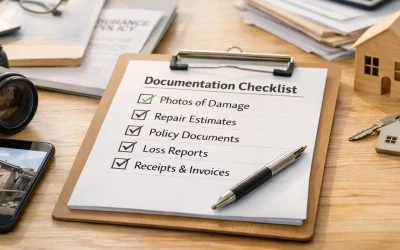
- After the Loss: The Documentation Checklist That Protects Your Insurance Claim
- Material Alterations: Florida Condominium Law
Disclaimer: This article was created by Rabin Parker Gurley, P.A. for informational purposes only; not to provide legal advice. While we hope this article is beneficial to you, we do not guarantee its completeness or applicability to any particular legal situation. Further, our providing access to this information and/or to any materials is not intended to, nor shall it be deemed to, create, and receipt of it does not constitute, a lawyer-client relationship. Those who read this information should not act upon it without seeking legal advice.
© 2026 Rabin Parker Gurley, P.A. All rights reserved. Recipients may reproduce materials available on our website for their own personal use and for non-commercial distribution. Copies must include the above copyright notice.